
Meet the Author: Jane Duffus
We speak to Bristol Books author, Jane Duffus, about her new book, The Women Who Built Bath and find out more about her inspiration for writing it and some of the surprising stories and amazing people she discovered.
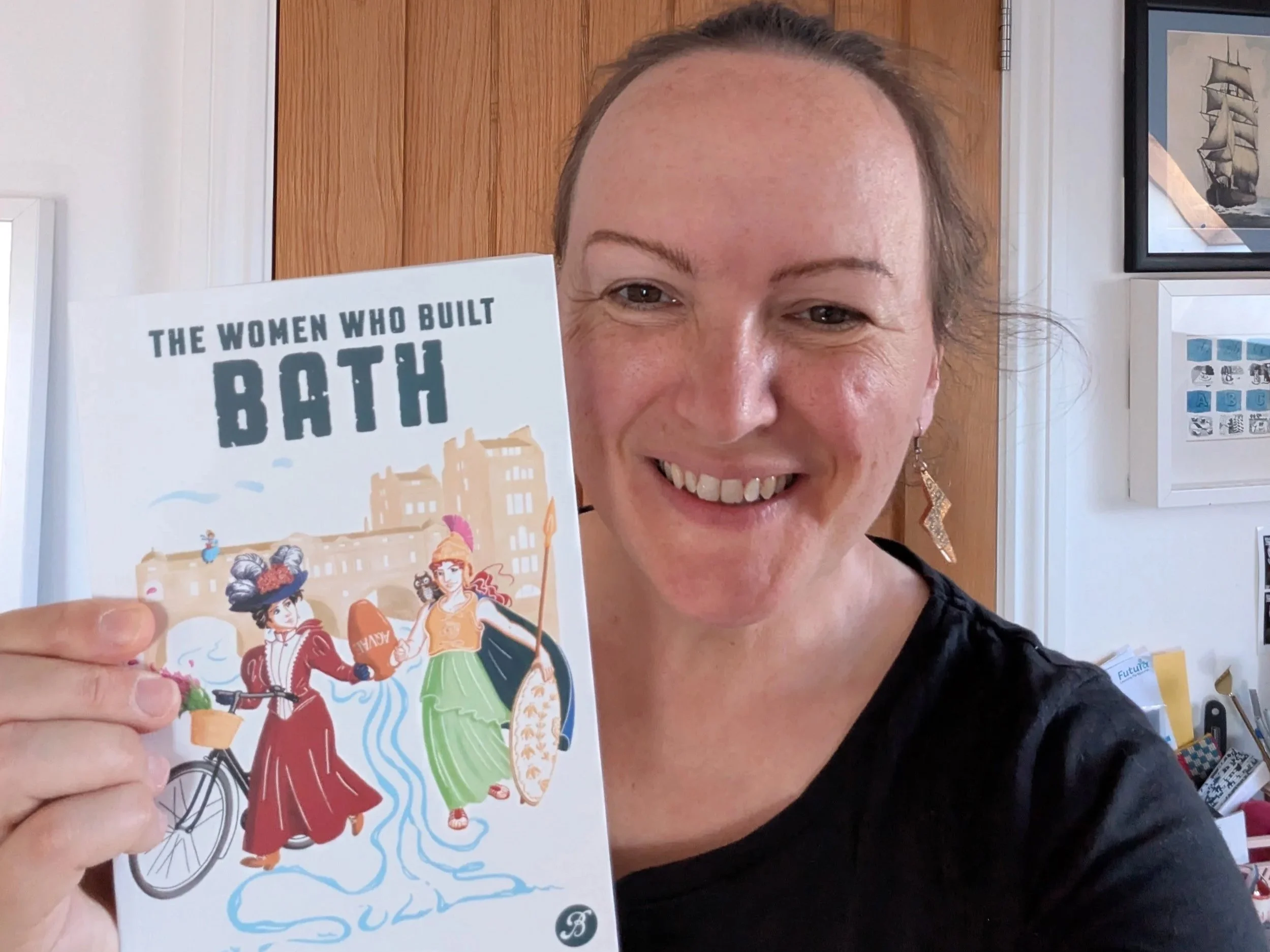
Author, Jane Duffus
1. After celebrating the remarkable women from Bristol over three volumes, what inspired you to turn your attention to Bath, and how different did the city feel as a subject?
While there is no shortage of amazing women from Bristol to write about (I’ve got another 450 or so sitting in a document who could be in future Bristol books), I thought that after three books it was time to take a look at another city and Bath was the obvious choice. Of course, there are lots of similarities between the women from the two cities in that both cities had strong suffrage stories and plenty of wartime sheroes and so on. But the stories from Bath also felt like they were showing a stark difference between the very wealthy and the very poor women, with fewer women sitting in the middle ground so that posed some interested questions.
2. Researching overlooked women has become something of your trademark. What was the most surprising story you uncovered while writing The Women Who Built Bath?
The story of Ann Partis is one of my favourites. In the 1820s, as a widow, she used her considerable wealth to set up an almshouse for ‘decayed gentlewomen’ which still operates today. Yet I had heard of neither Ann nor Partis College, and the more I discovered about both, the more fascinating I found her. I also loved the anecdotes about some of the women who lived at the almshouse and their demands, such as agreeing to go to the compulsory church services but only if the services weren’t too early in the morning. I can sympathise with that.
3. Your books champion women from all walks of life, not just famous names. Why is it so important to tell the stories of ordinary women alongside the better-known historical figures?
In many ways, I think the stories of ‘ordinary’ people are much more interesting than the stories of wealthy and privileged people who have lived lives of comfort. ‘Ordinary’ people are much more relatable to most of us and we can identify with their experiences which often echo our own, which makes their achievements all the more remarkable given these are people who are juggling jobs and family care alongside trying to change the world in some way, big or small.
4. Every city has its own myths and celebrated characters. Were there any women from Bath whose achievements made you wonder, "Why doesn't everyone know her name?"
Pretty much all of them! I give a lot of talks to groups about my books and the stories of the women I’ve found. Occasionally, someone will pick up one of my books, flick through it and put it down in disgust, saying, ‘I’ve never heard of any of these women.’ But that’s the point. Why would someone want to read a book about something they already know? The point is that the books celebrate previously unsung women. So while there are a handful of names readers will be familiar with, on the whole the women in the Bath book will be new to readers. I really enjoy shining a light on those unfairly forgotten women and sharing their stories with others who will also appreciate them.
5. Bath is often associated with Georgian elegance and famous figures like Jane Austen. Does your book reveal a different side of the city's history that readers might not expect?
Readers might be surprised at some of the grittier stories in the book: such as stories of prostituted women or malevolent maid servants. There are also, as always once you start digging into people’s lives, a few accounts of very complicated romantic scenarios… but I’ll leave that there to keep people intrigued. I’ll just say that I’m relieved my own private life is a lot less complicated than that of some of these women.
6. You've spoken before about the challenge of recovering women's histories when records are incomplete or names have changed. How do you balance historical accuracy with bringing these forgotten lives vividly to the page?
While historical accuracy is of course very important, there are a few places where sometimes I need to use a little bit of commonsense and general history to fill in a gap. For instance, in the extraordinary story of Louis Stride, who was essentially a ‘street urchin’ in Edwardian Bath, I needed to draw on some general history of the time and area in order to explain why one or two things were as they were. And that’s often the case when telling these stories but, of course, I try to keep everything as factually accurate as I possibly can.
7. What do you hope readers will see differently the next time they walk around Bath after reading this book? Is there a street, building or landmark they'll never look at in quite the same way?
Readers of the Bristol books sometimes tell me that they now walk around the city and view it in a different way, because they walk down streets or look at certain buildings and they can imagine people who lived there or events that took place there that they previously had no idea about. So I hope the Bath book has the same effect. I know that I love looking at places and trying to imagine the people who previously walked there, so I hope other people do as well.
Inside this book you will find the previously untold stories of 200 incredible women from Bath’s history. They were all women who helped to shape Bath into the extraordinary city that it is today. A few of them you will know… but most of them will be new names to you.
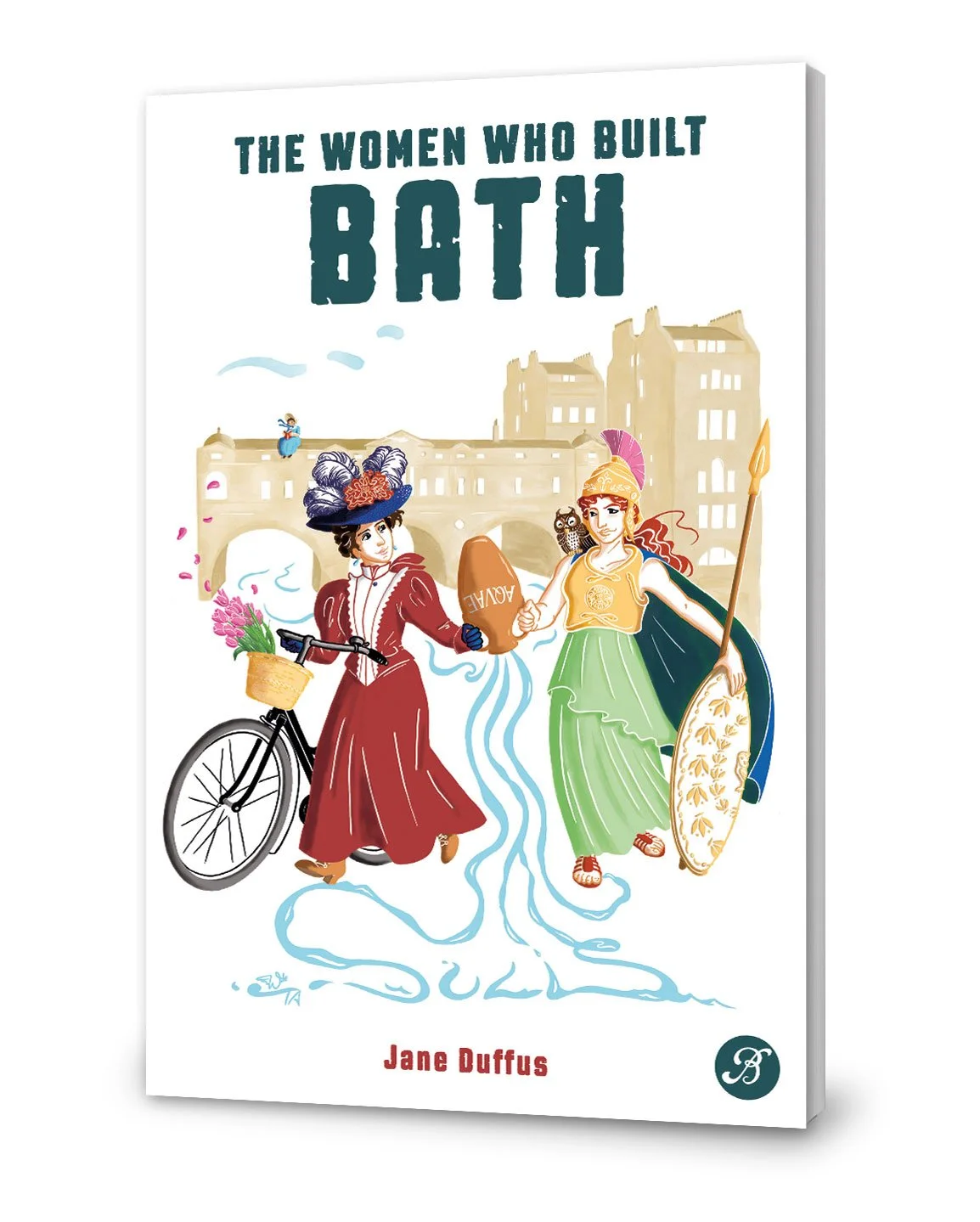
Inside this book you will find the previously untold stories of 200 incredible women from Bath’s history. They were all women who helped to shape Bath into the extraordinary city that it is today. A few of them you will know… but most of them will be new names to you.
You can expect to find 26 suffragists, six artists, four doctors, two pioneering police officers and one big-hearted chicken in here… plus many more besides. Such as the sisters who enjoyed wild swimming into their 70s, the woman who founded a community of almshouses for single women, the doctor who travelled to her patients by horse so as not to be late, and the homeowner who made her voice heard by sunbathing in a scandalously yellow bikini.
These women come from all walks of life and all parts of the city, spanning laundresses and workhouse inmates to theatre revolutionaries and city councillors. Every woman featured in these pages has made her mark on this city and deserves her moment in the sun.